Visiting Angkor Wat: A First-Timer's Guide to the Temples
- What Visiting Angkor Wat Actually Involves
- First, Understand What "Angkor Wat" Means
- How Many Days Do You Need at Angkor?
- Angkor Wat vs Angkor Thom: What's the Difference?
- Is the Angkor Wat Sunrise Worth It?
- Angkor Wat Dress Code and Temple Etiquette
- Getting There, Around, and In
- A First Day That Works
- When to Go — and How to Beat the Heat
- Final Tips From the Ground
What Visiting Angkor Wat Actually Involves
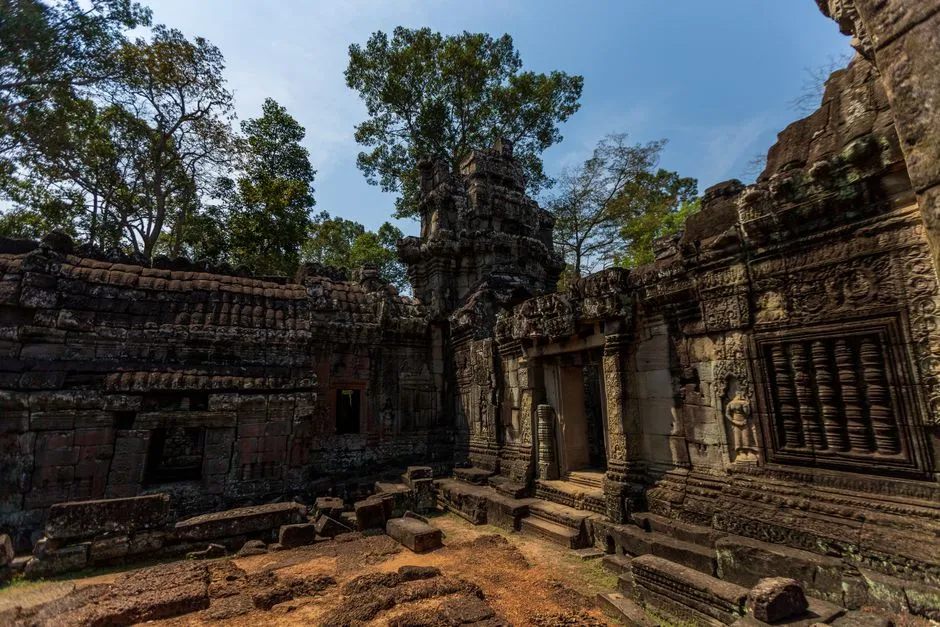
Visiting Angkor Wat means buying an Angkor Pass, basing yourself in Siem Reap a few kilometers south of the park, and exploring the Angkor Archaeological Park — a sprawling complex of dozens of temples, of which Angkor Wat itself is only the most famous. Most first-timers spend two to three days with a tuk-tuk or car driver, covering the classic trio of Angkor Wat, Angkor Thom, and Ta Prohm on day one, then ranging further afield. It is hot, it involves a lot of walking and stair-climbing, and it rewards an early start and a bit of history homework more than almost any other place you will ever visit.
That is the short version. The rest of this guide covers the decisions that actually shape your visit: how many days to budget, whether the famous sunrise is worth the alarm, what to wear, how Angkor Wat differs from Angkor Thom, and how to pace yourself so temple fatigue doesn't flatten you by lunchtime on day two.
First, Understand What "Angkor Wat" Means
Travelers use "Angkor Wat" loosely, and it causes real confusion. Three terms matter:
- Angkor Wat is a single temple — a vast twelfth-century monument built under King Suryavarman II, originally dedicated to the Hindu god Vishnu and later adapted to Buddhist worship. It is the largest and best-preserved temple in the park and the one on Cambodia's national flag.
- Angkor Thom is a walled royal city just north of Angkor Wat, built later in the twelfth century under Jayavarman VII. It contains several major sites, most famously the Bayon with its serene carved stone faces.
- The Angkor Archaeological Park is the whole protected area — hundreds of square kilometers containing Angkor Wat, Angkor Thom, Ta Prohm, and dozens of other temples, all covered by one ticket.
When someone asks "how many days do you need at Angkor Wat," they almost always mean the park. Angkor Wat the temple takes two to three hours to see properly. The park can absorb a week.
How Many Days Do You Need at Angkor?
For most first-time visitors, three days is the sweet spot. It lets you see the headline temples without cramming, build in a sunrise, reach one or two outlying sites, and take a midday break every day — which, in Cambodia's heat, you will want.
Here is how the standard options compare:
| Days | What you can realistically see | Who it suits |
|---|---|---|
| 1 day | Angkor Wat, Angkor Thom (Bayon), Ta Prohm — the "small circuit" highlights | Tight itineraries, cruise stopovers |
| 3 days | The above at a humane pace, plus the grand circuit (Preah Khan, Neak Pean, Ta Som) and an outlying gem like Banteay Srei | Most first-timers |
| 7 days | Everything above plus remote sites, repeat visits at different light, and genuine downtime | Photographers, history lovers, slow travelers |
The Angkor Pass has historically been sold in one-day, three-day, and multi-day versions, with the longer passes valid across a spread of days rather than requiring consecutive visits — useful if you want a rest day in Siem Reap in the middle. Prices and validity rules change, so confirm current details with the official Angkor ticket operation before you go.
A one-day visit is genuinely worthwhile if it's all you have — the small circuit delivers the three most memorable temples. But it means a dawn start, a packed schedule, and no margin for lingering. If Angkor is a major reason you're coming to Cambodia, give it three days and build the rest of your route around that; our Cambodia itinerary guide shows how Angkor fits into 7-, 10-, and 14-day trips.
Angkor Wat vs Angkor Thom: What's the Difference?
This is the comparison first-timers ask about most, and it's worth getting straight because the two experiences are completely different.
Angkor Wat is one enormous, unified temple. You approach across a broad moat and causeway, pass through concentric galleries carved with some of the longest bas-reliefs in the world — including the celebrated Churning of the Ocean of Milk — and climb toward the central towers. It is formal, symmetrical, and overwhelming in scale. Unusually for Khmer temples, it faces west, which is part of why it photographs so well at sunrise.
Angkor Thom is a city, not a temple. You enter through monumental gates topped with carved faces, and inside you move between separate sites: the Bayon at the center, the Baphuon, the Terrace of the Elephants, the Terrace of the Leper King, and quieter ruins in the surrounding forest. The Bayon's dozens of face towers are the emotional heart of the whole park for many visitors.
See both. They are close together, and every standard small-circuit day covers them. If you must rank them: Angkor Wat wins on grandeur and carving, the Bayon wins on atmosphere and strangeness. Ta Prohm — the temple famously left in the grip of enormous tree roots — completes the classic trio and feels different again.
Is the Angkor Wat Sunrise Worth It?
Yes, once — with realistic expectations. The classic view is from the reflecting pools in front of the temple's west entrance, watching the five towers emerge in silhouette as the sky lightens behind them. On a clear morning it is genuinely one of the great travel spectacles.
What the postcards don't show:
- You will not be alone. Hundreds or thousands of people gather at the pools every morning in high season. Arriving before the crowd means leaving Siem Reap in full darkness, typically around 4:30–5:00 a.m.
- The sky doesn't always cooperate. In the rainy season especially, dawn can be a gray fade rather than a fiery display. There is no refund on lost sleep.
- The hour after sunrise is the real prize. Most sunrise crowds leave for breakfast immediately after the sun clears the towers. If you instead walk into Angkor Wat right then, you'll explore its galleries in soft light with a fraction of the crowd — this is the single best crowd-avoidance trick in the park.
If you have three days, do sunrise once and spend your other mornings starting early at different temples — dawn at a quiet site like Ta Prohm or Preah Khan, shared with birdsong instead of tripods, is for many travelers the better memory.
Angkor Wat Dress Code and Temple Etiquette
Angkor's temples are active religious and historical sites, and a dress code is enforced, most strictly at Angkor Wat itself.
The rule of thumb: cover your shoulders and your knees. In practice that means:
- T-shirts or shirts with sleeves — no tank tops, no bare shoulders, no see-through fabrics
- Shorts or skirts that reach the knee, or lightweight long trousers
- Access to the uppermost level of Angkor Wat (the Bakan sanctuary) is controlled and the dress standard there is applied firmly — turnstiles and attendants do check
Beyond clothing, the etiquette that matters:
- Don't touch carvings or climb on ruins outside marked paths. The bas-reliefs have survived centuries; oily fingertips wear them down.
- Be quiet and respectful around monks and worshippers. Ask before photographing monks, and never position yourself higher than a seated Buddha image for a photo.
- Dress rules apply all day. A scarf over the shoulders is often not accepted as a substitute for sleeves at the strictest checkpoints, so wear a real shirt.
Loose, light, breathable clothing serves double duty here — it satisfies the dress code and it's what you want in the heat anyway. Bring sturdy shoes for steep, uneven stairs.
Getting There, Around, and In
Base yourself in Siem Reap. The town sits just a few kilometers south of the park and has accommodation at every budget, and its airport receives regional international flights.
Buy the Angkor Pass before you enter. Tickets are sold by the official Angkor ticketing operation, not at the temple gates, and passes are checked repeatedly inside the park. Your pass includes a photo taken at purchase. Buy only from official channels — tickets offered by touts or unofficial websites are a known scam risk.
Choose your transport:
- Tuk-tuk with driver — the classic choice. Open-air, breezy, and drivers know the circuits intimately. Agree on the day's route and price before setting off.
- Car with driver — air-conditioning is a genuine advantage in the hot season and for reaching distant temples like Banteay Srei.
- Bicycle — flat terrain and quiet park roads make cycling appealing for the fit, but distances are long and the midday heat is serious.
- Licensed guide — a trained English-speaking guide transforms the bas-reliefs and history from decoration into story. Worth hiring for at least your first day.
A First Day That Works
A proven small-circuit day, refined by millions of visitors:
- Sunrise at Angkor Wat, then explore the temple itself while the crowds go to breakfast.
- Mid-morning: Angkor Thom. Enter through the South Gate, take your time at the Bayon, then walk the Baphuon and the terraces.
- Midday: retreat. Eat, rest, swim if your hotel has a pool. The 12–2 p.m. heat is brutal and the light is flat for photos anyway.
- Afternoon: Ta Prohm, when the tree-root corridors catch slanting light.
- Late afternoon: either a sunset viewpoint or — often better — a quiet wander back along Angkor Wat's outer galleries as the day cools.
Day two suits the grand circuit (Preah Khan, Neak Pean, Ta Som, East Mebon, Pre Rup); day three suits the exquisite pink-sandstone carvings of Banteay Srei, about an hour's drive north, paired with a landmine museum visit or the Roluos group of early temples.
When to Go — and How to Beat the Heat
Angkor is open year-round, and every season involves heat. The dry months of roughly November to February bring the most comfortable temperatures and the biggest crowds; the hot season builds from March; the green season (roughly May to October) brings afternoon downpours, full moats, lush surroundings, and thinner crowds. There is no bad time, only trade-offs — our month-by-month guide to Cambodia's seasons breaks down what each part of the year means for temple days.
Whatever the month, the formula is the same: start at dawn, rest at midday, finish in the golden late afternoon. Carry more water than you think you need, wear a hat, and treat sunscreen as non-negotiable.
Final Tips From the Ground
- Do a little reading first. Even one evening spent on the Khmer Empire's basic arc — Hindu origins, the shift to Buddhism, the twelfth-century golden age — multiplies what you see in the stones.
- Pace beats coverage. Two temples explored slowly beat five glimpsed from a checklist. Temple fatigue is real; plan rest into every day.
- Keep your ticket handy. It is checked at multiple points, and fines for entering without one are significant.
- Cash is useful for drivers, small vendors, and donations, though payment options in Siem Reap keep expanding.
- Leave margin for wonder. The best Angkor moments — an empty gallery, a monk in saffron against gray stone, rain sweeping across the moat — never appear on an itinerary.
Angkor rewards travelers who treat it as the centerpiece of a Cambodia trip rather than a drive-by photo stop. Give it the days it deserves, dress and act with respect, and it will give you one of the most extraordinary experiences in travel.